By Sue Maclennan
Parliament’s Portfolio Committee on Water and Sanitation conducted a site inspection at Makhanda’s James Kleynhans Water Treatment Works (JKWTW) on Tuesday 25 January 2022. DWS spokesperson Sputnik Ratau said the visit to the Department of Water and Sanitation-funded upgrade project was to assess progress. Following numerous delays since the project started 10 years ago, the most recent revised anticipated completion date was March 2022. The upgrade is set to double the facility’s production to 20 megalitres a day.
For the past month, it’s been the town’s water reticulation rather than supply issues that has caused prolonged outages. But there have been questions about supply as well.
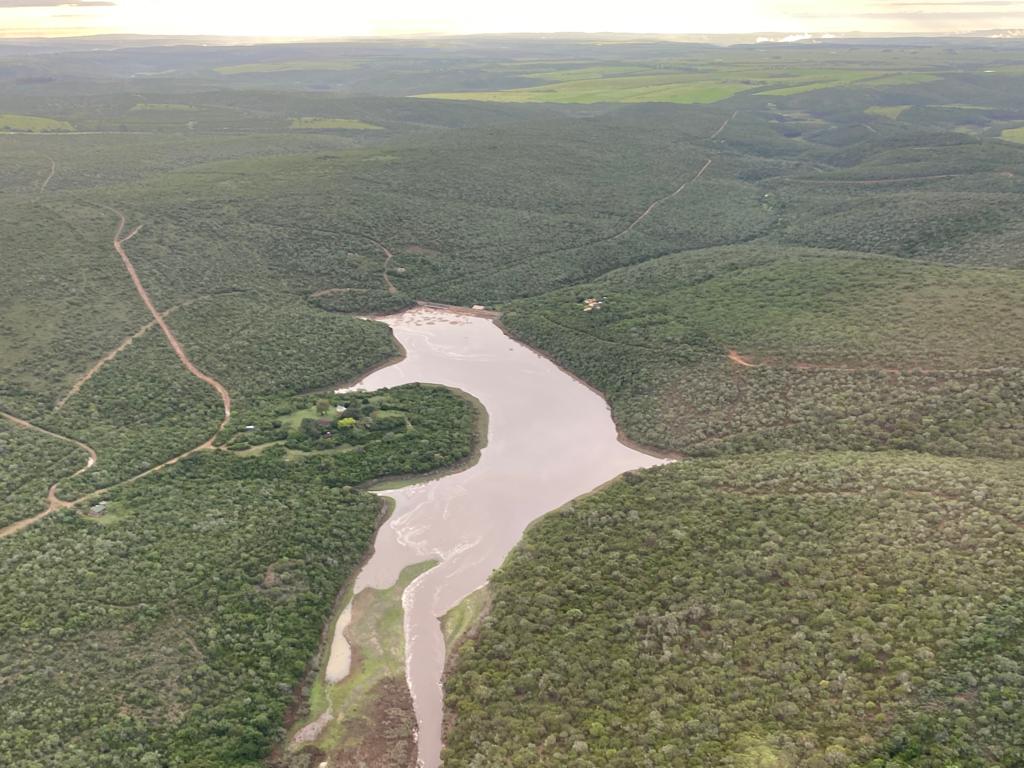
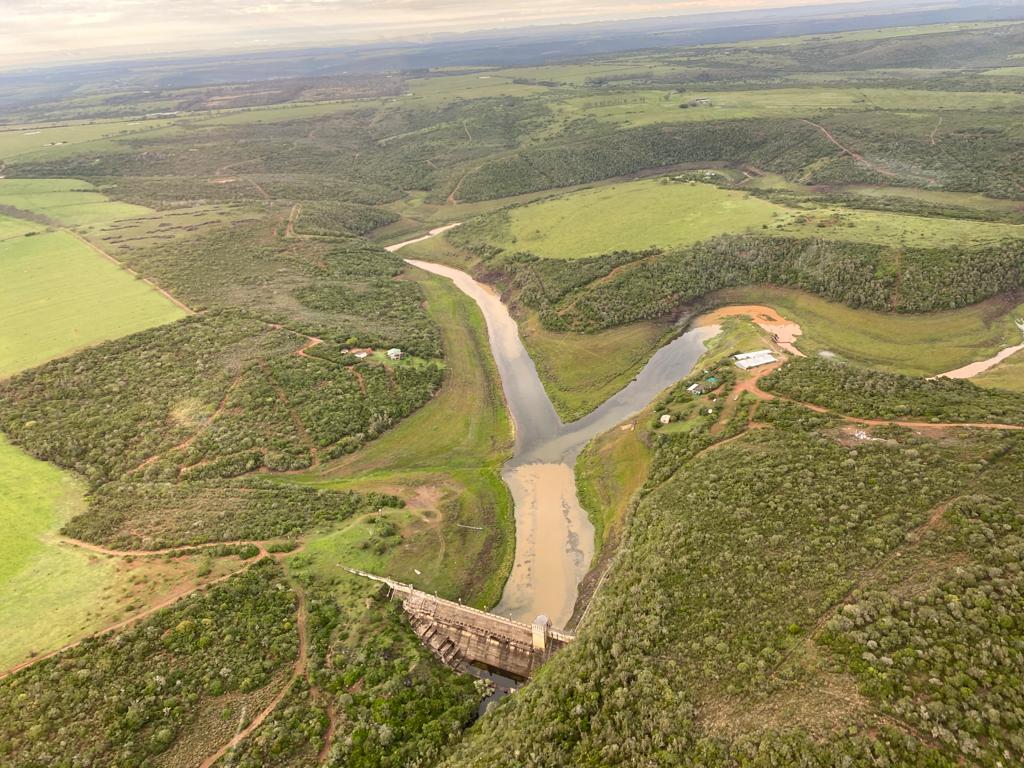
With too little rainfall in its catchment, Makhanda’s main reservoir, Settlers Dam, remains depleted. The R10 million refurbishment of Jameson and Milner Dam has yet to add to the water supply west of the town. However, recent photographs show Howisons Poort Dam to be full.
For a brief period in 2021, with Howisons at 75% and feeding the Waainek Water Treatment Works, the town received water every day. So residents have been puzzled to see in communication from the municipality that the reservoirs that are filled by Waainek (via Howisons Poort) are low.
In response to questions from SmilingSouth, Makana said, “Howisons Poort is currently utilised for Waainek; however it is currently operating at 60% capacity, in order to manage turbidity levels to be always below 1NTU [the unit used to measure the concentration of suspended solids in water].
“Also, the water on the western side of town is usually a mix from both Waainek and JKWTW,” the municipality’s infrastructure directorate said via Makana spokesperson Yoliswa Ramokolo.
This was because while the combined water storage capacity for west Makhanda is 13.52ML a day, Waainek’s design capacity (how much water a day it can treat) is 8ML.
The month-long outage in several parts of town was caused by problems with reticulation. A project to replace sections of this very old, mostly asbestos pipe system began last year and is still under way. MANCO, the contractors for that project, were the ones called to assist the municipal team to fix the long-running Worcester Street saga.
Burst pipes
The crucial Worcester Street pipe junction in Makhanda that repeatedly defied repair was finally fixed on 26 January. The conclusion to the engineering nightmare came after four weeks of repeated pipe bursts there and across the town left many residents with dry taps and short tempers. Makana Municipality was able to reinstate the town’s normal one-day-on, one-day-off regime, a day after Parliament arrived in town to inspect its main water treatment works and a day before councillors heard that water losses had amounted to R7.9 million in the previous financial year.
Responding to questions about multiple repeated burst pipes across Makhanda during the past month, Makana said the aged and dilapidated infrastructure; excessive pressure, when sections are isolated; and damage to the reticulation system during construction because the as-built drawings are often not accurate, were the main contributing factors.
Hard-to-get parts, rain filling up the repair trench, a TLB (“digger”) breaking down, further leaks filling up the repair trench with water and the repair team having to urgently attend to new serious pipe breaks across the town were some of the challenges the Makana team faced.
It wasn’t the first time that the combination of rain, clay ground and the ageing water system caused chaos at the Worcester Street site. In April 2018, local newspaper Grocott’s Mail reported on an operation to rescue a cow that fell in the water-filled trench after protracted repairs there.
Professional service provider
But questions have been asked about the qualifications and experience of those tasked with contracts and repairs, and those overseeing the town’s water systems.
Not knowing the [reticulation] system properly and not opening and closing valves in the correct sequence when turning the water on and off, may have contributed to the repeated breaks, a person familiar with the town’s decades-old water systems said. “Also failure to properly compress the pipe after fixing it. There is a lot of pressure in the pipes when you switch the water back on and if sand has just been thrown on top and not compressed, it will burst in the same place,” they offered.
Asked about the competence of those tasked with maintaining and repairing the town’s water systems, Makana responded, “The plumbing team and supervisors have the necessary qualifications, skills and expertise, at various levels, based on their job description. There is also a Professional Service Provider and a contractor with relevant CIDB grading, who is contracted for the replacement of the old asbestos pipes.”
Director of the Public Service Accountability Monitor (PSAM) at Rhodes University, Jay Kruuse, called on the Mayor and Municipal Manager to publicly release the approved organogram of Makana Local Municipality.
“This should include a breakdown of which posts are filled by whom and which posts remain vacant,” Kruuse said. “The public has a right to know the extent of vacancies and who in fact occupies which posts in the municipality, so that accountability mechanisms can be strengthened.”
Kruuse said the repeated and widespread water outages across Makana Municipality continued to violate the constitutional right of access to sufficient water.
“PSAM also calls on municipal councillors elected recently to interrogate the organogram and to take oversight action to address deficiencies that continue to impact negatively on the operations of the municipality.”
Critical upgrade
Parliament’s action-oriented visit to James Kleynhans Water Treatment Works last week was not in response to the month-long water outage in parts of Makhanda, but in order to do oversight on the critical upgrade to the facility that will ultimately ease the city’s supply problems.
DWS spokesperson Sputnik Ratau said MPs accompanying chairperson of the water and sanitation portfolio committee Robert Mashego were the committee’s Whip, Grace Tseke, Nancy Sihlwayi and Mogamad Hendricks. The DWS Eastern Cape team was led by the Provincial Head Portia Makhanya, Amatola Water chairperson Dr Mosidi Makgae and acting CEO Sazile Qweleka.
“This was an oversight visit by the Parliamentary Portfolio Committee on Water and Sanitation on DWS funded projects to assess progress made,” Ratau said. Other Eastern Cape projects they visited were Ngqamakhwe Bulk Water Supply; Xhora Bulk Water Supply; Mzimvubu Water Project at Maclear’s Siqhuqwini village (oversight visit for the access road to the dam wall); King Sabata Dalindyebo Presidential Intervention Bulk Water Supply Project; Ndlambe Emergency Bulk Supply Project and the Nooitgedagt Phase 3 Bulk Water Supply.
It was too early to comment on the Committee’s findings.
“The Committee will convene and discuss their observations and make recommendations and can release these as the Committee sees fit,” Ratau said. “The report will be compiled and processed according to the rules of Parliament.”
Meanwhile, in local government, Makana’s internal audit committee report tabled at last week’s council meeting revealed that water losses amounted to R7.9 million in the previous financial year.
“There is a high percentage of losses and revenue collection is slow,” said audit committee chairperson Professor Wesley Plaatjies.
“The cost of not implementing controls to reduce these losses versus the cost of repair and implementing controls over the long term need to be considered,” Plaatjies said. “The committee requested a fully costed report implementing loss controls for the next audit committee meeting.”



 SmilingSouth