Fourteen suspects involved in cable theft incidents, including a scrap metal dealer, were arrested on Tuesday when a team comprising the Vosman South African Police Service, the Hawks and Eskom Investigators, swooped on multiple premises in Vosman outside the township of KwaGuqa in Mpumalanga.
A large volume of stolen cables, comprising of aluminium and copper, was found stored on several of the premises. A criminal case has been opened against the perpetrators, including the scrap dealer and some of the security personnel and more arrests are likely to follow.
In the past week, Eskom experienced several theft and vandalism incidents on the 400kV Vulcan Transmission line in the region. The repeated crime incidents contributed to Eskom having to declare a ‘major incident’, as a result of the extensive damage, loss of supply to thousands of customers and increased safety risks. Towers on the line were twisted and severely damaged and the roads in the region were also blocked with the fallen electrical lines, which also put lives in danger.
Following intensive investigations, the joint SAPS/Eskom team visited an unscrupulous scrap metal dealer in eMalahleni. Large amounts of copper cables were found loaded on a truck that was ready to off-load at the facility. The truck driver was arrested. He pointed out a residential property in Vosman where he had collected the stolen cables earlier. More copper cables were found at the premises, all of which was prepared and ready for shipment.
Further investigations revealed that some security personnel deployed to protect the Eskom line were also involved with the syndicate.
“Cable theft continuously affects business operations and hamper the provision of basic essential services to industry and to communities,” said Advocate Karen Pillay, Eskom’s Head of Security. Between the various State- owned companies, namely Eskom, Transnet, PRASA and Telkom combined, the direct losses incurred culminate to more than R7 billion a year. The knock-on loss to the economy is estimated at R187 billion.
“Such levels of criminality undermine the ability of the State-owned companies to deliver the much-needed services such as electricity, rail, communications and other critical infrastructure,” said Adv Pillay. “This exacerbates localised power cuts and the implementation of loadshedding. This poses a significant and direct impact on the recovery of the South African economy.”
“This is economic sabotage of the highest degree; and the perpetrators of such crimes must be brought to book and dealt the full might of the law. Customers pay the price for such crimes through increased tariffs. We shall pursue the investigations together with the Hawks and shall intensify operations against the syndicates, ensuring that they are disrupted,” said Calib Cassim, Eskom’s acting Chief Executive Officer. “We shall assist the Hawks in tracing every individual who participates in the criminal enterprise and ensure prosecution.”
Eskom urges all scrap metal dealers, foundries and smelters to refrain from buying stolen cables. The members of the public are encouraged to report any suspicious activities to the Eskom Crime Line number: 0800 11 27 22 or to call the Crime Stop Hotline on 086 00 10111.
“The government of Putin is not Mikhail Gorbachev’s government that helped us.”
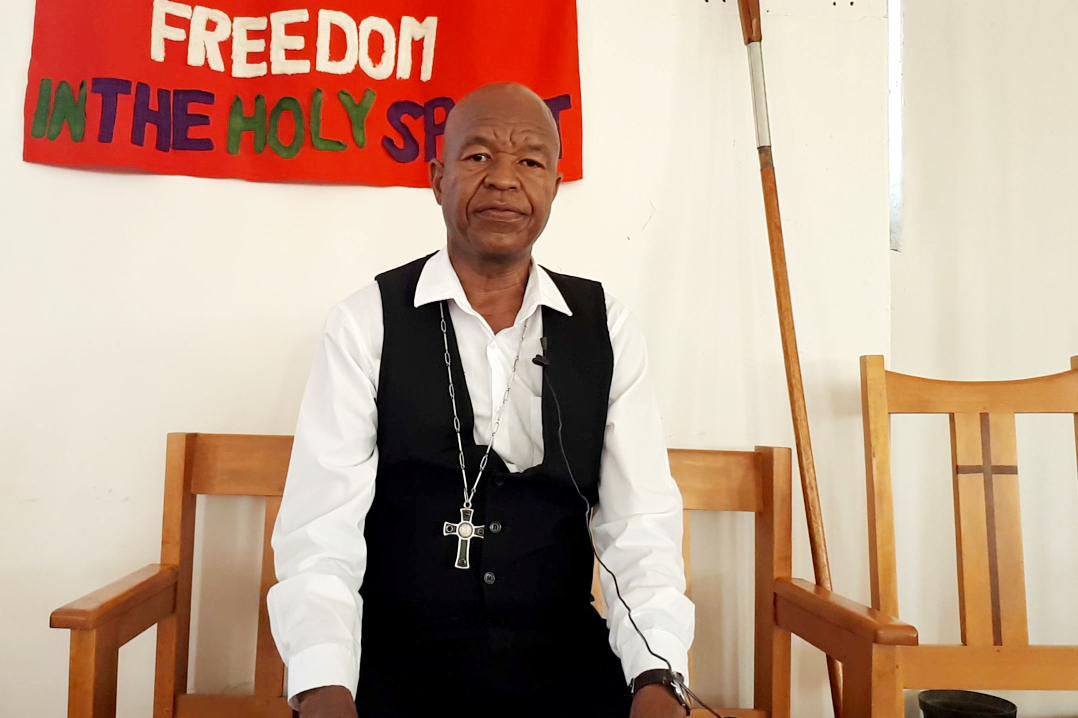
Archbishop Nkosinathi Ngesi, of the Ethiopian Episcopal Church, has put his weight behind growing outrage at the war in Ukraine that has in the past two weeks seen more than 100 civilian deaths reported, including 13 children.
Ngesi, who is a former military chaplain, said, “This Russia is not the government that helped us in our fight against apartheid, when we sent our soldiers to be trained there.
“This Russia is there for nuclear resources, and for Ukraine’s oil and gas.
“Our government must call on Putin’s government to withdraw his forces, and stop killing the people of Ukraine,” Ngesi said. “Our government is wrong to keep quiet and we are disappointed that they abstained in the United Nations vote calling on Russia to withdraw.”
On Wednesday, 141 of the United Nations’ 193 members voted in favour of a resolution demanding that Russia “immediately, completely and unconditionally withdraw all of its military forces from the territory of Ukraine within its internationally recognised borders”.
The voting concluded a special emergency session of the General Assembly that began on Monday.
Five countries – Belarus, the Democratic People’s Republic of Korea (“North Korea”) Eritrea, Russia and Syria – voted against it. South Africa was one of 35 that abstained.
“Our government did not read the mood of South Africans when they did this,” Ngesi said. “They did not represent us when they abstained.”
On Tuesday, the South African Council of Churches (SACC) issued a statement supporting proposed mediation by Pope Francis “for lasting peace and security between Russia and Ukraine”.
The SACC, in its statement, urged Christians to observe the Ash Wednesday fast and “take time praying for peace and the success of the efforts for an unconditional ceasefire, earnest negotiations for guarantees of lasting peace and security for both Ukraine and Russia, for the wellbeing and prosperity of God’s people in both countries”.
Archbishop Ngesi said he supported the SACC’s statement, but went further.
“The South African government must call on Putin to withdraw his forces and stop killing the people of Ukraine. Our government is wrong in keeping quiet because at the end of the day, the people of Ukraine will judge us by our response.”
On Friday, International Relations and Cooperation Minister Naledi Pandor, said, “South Africa is continuing to encourage all the parties, through quiet diplomacy, within all relevant international mechanisms, such as the United Nations (UN) including Brics, to strengthen all diplomatic efforts to avoid an escalation of tensions, and work towards an inclusive, sustainable and peaceful solution based on cooperation and dialogue.”
Pandor said this, IOL reported, in reply to a written question in Parliament from the IFP’s Mkhuleko Hlengwa.
The Ethiopian Episcopal Church had its origins in 1899 under theologian James Mata Dwane. Today it has 87 branches throughout South Africa, in every province, with a membership of around 2 million. An affiliate of the South African Council of Churches, its head office is in Makhanda and Archbishop Nkosinathi Ngesi is its leader.
Archbishop Nkosinathi Ngesi of the Ethiopian Episcopal Church has criticised the South African government’s response to the crisis in Ukraine. Photo: Sue Maclennan
Alarming reports, some of them informed by experienced technical sources, paint a picture of an imminent health and humanitarian disaster, with broken pumps, a shortage of treatment chemicals, an official’s removal of a crucial monitoring system and no public access to up-to-date water quality testing results. Makana has slammed some of the claims as ill-informed and says they could create unnecessary panic among the public. SmilingSouth independently asked expert sources to help judge how concerned we should be.
By Sue Maclennan
It sent shockwaves across South Africa when in 2019, the Gift of the Givers was welcomed by desperate Makhanda residents during a weeks-long water outage. Investigations by civil society activists and a councillor suggest the town’s 86 000-odd residents could be at risk of a water crisis at least as bad as any the town has survived in the past decade.
Monitoring by the DA and the Makana Residents Association has been reported on those organisations’ platforms during the past few weeks. The latest reports on Friday 18 February and Monday 21 February from councillor Geoff Embling and the Makana Residents Association say that:
Of seven pumps that should be rotating at Makhanda’s two water treatment facilities, only one is properly operational;
Both were set to run out of treatment chemicals by early next week (the water manager says these have arrived – please note the update on this below);
An official has had crucial water-level monitoring equipment removed from two stations;
With current water testing results yet to be made available, the community is in the dark about safety compliance.
How Makhanda’s water works
Makhanda has two water systems. Howieson’s Poort and Settlers dams depend on rainfall in catchments west of town. They serve the CBD and suburbs in west Makhanda via the Howieson’s Poort pump station and Waainek water treatment works.
The Orange-Fish River scheme feeds Glen Melville Dam. Pumping from there, the James Kleynhans Water Treatment works and pump station serve the east side of Makhanda, including its townships.
“It was alleged that one pump burned out due to the operator running the pump whilst the inlet valve was closed,” Embling wrote. The second pump’s impellor had broken when it was run during low water levels.
The remaining pump was in poor working condition, leaking water, Embling wrote. His sources estimated that Waainek currently receives about 70% of the 8 megalitres a day it requires from Howieson’s Poort pump station.
“If the remaining pump was to break, the Western half of town would be without any water at all…” Embling wrote on 18 February.
A transfer pipeline carrying water from James Kleynhans to west Makhanda should ensure the whole town receives water, even during drought. But it’s broken and hard-to-source parts are delaying its repair.
There were also fears about the integrity of the James Kleynhans system. Embling, informed by an experienced engineer, said James Kleynhans required four pumps, or at least three in rotation, to prevent overloading. Currently there were only two.
“Out of the two remaining pumps at James Kleynhans, one… keeps tripping and must be reset, so the pump station is largely reliant on one pump to deliver water from James Kleynhans to the eastern side of town,” Embling said. “It is disturbing that both… water supplies are basically running on one cylinder… it seems as if the two ‘lifelines’ to [Makhanda] are hanging by a thread.”
More than 86 000 residents would be affected should both fail at the same time, Embling said.
Embling described an incident at Waainek in December 2021.
“Poor flocculation and treatment [resulted in] in dirty water… [and] approximately 24 megalitres of treated water being released down the hill at Waainek. The wasted water had allegedly been treated with just over a ton of chemicals.”
Embling said a report in the recent Finance portfolio committee said Makana’s supplier of water treatment chemicals had been paid close to R200 000, but had not delivered. The municipality had issued them with a letter of non-compliance and (at the time) there were less than two weeks’ worth of treatment chemicals left.
“The public needs to be informed about the situation,” Embling said.
The concern came as the Chris Hani District Municipality has become the latest public entity to advise residents to boil tap water due to poor quality. Nelson Mandela Bay metro has now declared their water safe to drink following diarrhoea and vomiting outbreaks and the death of a child allegedly linked to dirty water. Buffalo City Metro Municipality’s boil water advisory still maintains.
A 21 February letter from the Makana Residents Association to its members echoed Embling’s warnings and said it was a concern that the only person with access to the municipality’s high-tech monitoring system, SCADA, was the municipality’s water manager. Two other monitoring terminals had been removed from their stations at a local engineering company, and Rhodes University.
Continuing outages
Meanwhile, on the ground, residents and businesses continue to experience outages – in some cases for longer than two weeks at a time. The regime of providing water on alternate days is intended to allow all the town’s reservoirs to fill, so there can be equitable distribution from the gravity fed system. However, residents have frequently reported no water, or an early cut-off on days when they are due to have water.
A break in the transfer line from James Kleynhans and the Worcester Street engineering nightmare, along with numerous pressure-related pipe breaks across the town, have brought about several outages since the beginning of the year, in some areas as long as two weeks at a time. Most recently, a large release of water for downrtream users into the Fish River system that serves James Kleynhans resulted in high turbidity there, with challenges for treatment and therefore supply.
Some residents in Fitzroy Street have had no water at all in their taps for over two weeks.
“I can’t remember the exact date our water went out,” one resident told SmilingSouth. “But it’s been over two weeks now that we’ve had no water. “Our tanks are almost dry now and there is no rain.”
Fitzroy Street is the site of a project to replace old asbestos pipes. Completion of the project was hampered by the theft two weeks ago of several (metal) connecting valves.
On neighbourhood WhatsApp groups across the town, residents and business owners frequently report taps running dry early on “water on” days.
By Friday 25 February, residents in Emacangcini near JD Dlephu Stadium – served by the James Kleynhans system – reported having had no water for three days.
Makana’s Communications team posts updates daily. These sometimes include warnings of additional outages for maintenance or repairs; however, some outages aren’t explained and residents continue to vent their frustration at this on social media.
‘Misinformed perspectives’
Responding to questions based on the reports, Makana Municipality has hit back at the monitoring visits.
“Unauthorised visits without relevant escorts are not allowed, as they tend to provide misinformed perspectives,” the municipality said via its communications department.
The response from Makana Municipality to this reporter’s questions is included in full below. Some of the responses raise further questions. For example, Makana says of the Howieson’s Poort Pump Station that the municipality has submitted business plans to potential funders for its refurbishment, including the purchase of a full pumpset.
Amatola Water, which managed Makana’s bulk water supply from 2013 to 2017, completely refurbished the Howieson’s Poort pump station at a cost of R2 116 804.77. This included repairing motors 1 and 2 at Howieson’s Poort pump station; completely refurbishing a third pump; upgrading the pump control panels and installing instrument control devices, among other upgrades and repairs. This information is contained in the organisation’s close-out reports. In presentations to the municipality and residents at the time (2017), as well as earlier interviews with this reporter, Amatola Water explained that new pump and motor were specifically built to ensure that there was sufficient spare capacity to minimise the risk if there was catastrophic failure of pump sets 1 or 2. This was done due to the very long lead times to have those big motors and pumps repaired (around six months).
At the time, it cost around R500 000 to refurbish one of the Howieson’s Poort pumps. A single impeller blade took a week to be precision-engineered by the supplier.
It was for these reasons that protection mechanisms were built into a brand new control panel at the facility. A Programmable Logic Controller, it’s designed to receive data from the operating components (the pump systems) and in turn send operating instructions (such as to shut down the pump if it’s overheating).
Makana’s responses (as of 22 February at 8pm)
Water treatment chemicals
Makana Municipality (MM): The available chemical is sufficient to take us to Thursday, 24/02, when the next batch is delivered. There is a general shortage of water treatment chemicals, due to scarcity of raw materials nationwide (see http://ws.dwa.gov.za/IRIS/notice.aspx), and this is not unique to Makana Municipality.
UPDATE ON 25 FEBRUARY 2022 Makana’s Water Manager Gubevu Maduna Friday morning 25 February told this reporter that water treatment chemicals for the two waterworks had been delivered on Wednesday 23 February – a day earlier than scheduled. “We also have backup stocks, so it was not going to be a problem,” he said.
‘Burnt out’ pump at Howieson’s Poort
MM: The matter was reported and investigated but could not be proven. However, the municipality will gladly accept any further information that the community can assist with.
Second broken pump at Howieson’s Poort
MM: When the level of the dam is low, water quality deteriorates… high amounts of suspended solids [cause] excessive throttling on the sleeves… the impellers get stuck in the neck ring…”
NOTE FROM A SOURCE WITH KNOWLEDGE OF THE SYSTEM: For either of these catastrophic events to occur, either the PLC was not working, or it was bypassed. The software is designed to make the pumps shut down before an event such as cavitation or overheating.
Remaining pump at Howieson’s Poort
MM: The remaining Pump at H/Poort is designed to pump 131l/s, translating to 11,3Ml/day, which is more than enough for the design capacity of Waainek Water Treatment Works, hence the excess amount of water pumped, but not treated is stored in the lei dams. The pump was repaired in June 2021… [it] is currently working and not in need of repairs. The pump is designed to have a circulation of cooling water and wet gland packings, for its normal operations. This may be viewed as a leak, from a layman’s point of view, hence unauthorised visits without relevant escorts are not allowed, as they tend to provide misinformed perspectives.
NOTE FROM EXPERIENCED ENGINEERS OUTSIDE THE MUNICIPALITY Source 1: The response from muni is correct in that pumps have packing glands (kind of bearings) that are kept moist with water from the pump – it is not usually a lot of water (a trickle) so if it appeared to be a leak there could be a problem.
Unfortunately the municipality has responded according to some of the details and not addressed the most serious issues: Howieson’s Poort has only one pump which has to operate 24/7 in order to supply water for west of town while the transfer pipe is damaged.For an official to have the opinion that only one pump is necessary at Howieson’s is indicative of bad practice being taken as acceptable.
Source 2: Yes it’s correct that water pipes fixed to each pumpset are meant to drip at a certain rate to cool down the bearings. Howiesons Poort requires three pumps: one duty pump, one standby pump and one cold standby pump. These must be alternated to allow for maintenance.
These sources, with whom this reporter communicated directly, asked to remain anonymous.
James Kleynhans pumps
MM: JKWTW has a design capacity of 10Ml/day and the Treatment works delivers and pumps from the Treatment Works to the Reservoirs an average 11.5Ml/day which is only achievable with 2 working Pumps. So, it is incorrect to claim that only 1 pump in JKWTW is effectively working. The pumps are designed to cut off when the clear water well is at minimum level, which may be viewed as tripping by a non-expert. This is a protection mechanism that is designed to minimise catastrophic damage that could occur should the pump run without enough water in the suction head. Once again, this is an ill-informed view, which creates unnecessary panic [among] the public.
NOTE FROM AN EXPERIENCED ENGINEER OUTSIDE THE MUNICIPALITY If the pumps are stopping due to an empty intake tank that is normal – but if the pumps were tripping (due to a fault such as overheating) that is a different matter. JKWTW with only two pumps is also operating at full capacity without provision for standby and maintenance. This is bad and very risky procedure. There is a reason that these pump stations have been designed by engineers with respectively three and four pumpsets. Emphasis should be on these bigger issues without the Municipality answering only some of the technicalities.
This source, with whom this reporter communicated directly, asked to remain anonymous.
What is the plan if the single operational pump at one or other (or both) treatment plant(s) breaks down?
MM: JKWTW: All 4 pumps are at the plant… However, what is missing, are the 2 motors, to have 4 complete pumpsets. 3 motors went for repairs and are ready to be delivered and installed.
MM: HOWIESON’S POORT: The 2 pumps went for strip and quote, however, due to the associated costs, it was viewed uneconomical to repair than replacing. The Municipality is in constant talks with the Service Providers, to establish various options that could be most economically viable and beneficial to the Municipality. On the other hand, the municipality had submitted Business Plans to potential funders for the refurbishment of the pumpstation which also includes a purchasing of a full pumpset.
24 million litres of treated water wasted in December 2021
MM: The total coagulant used for the month of December was 900 litres (1035kg) to treat 69.7ML. 60% of this water was further treated with [disinfectant] before [entering] the reservoir. The remaining 40% had to be released into the stream that flows back to Howieson’s Poort Dam, as it was not fit for human consumption. This had nothing to do with the incorrect methods, but rather a situation resulting from an abnormal raw water turbidity, for the available coagulant normally used at Waainek WTW. The plant is usually operated with a low-turbidity range coagulant… raw water turbidity is normally below 40NTU. As a result of the flash floods in December, the turbidity of the raw water spiked up to more than 1000NTU.
SCADA system monitoring panels removed
MM: The SCADA is an operational system that helps the operators to monitor and manage the water value chain. The current operator of the Makana Water System is Makana Water Department which is managed by Mr Gubevu Maduna… This is a vulnerable system that requires restricted access for control purposes and accountability, hence it cannot be co-managed and accessible to everyone.
Water quality testing results
MM: Samples were taken and the results are available, however cannot without being uploaded on DWS’s IRIS system… Once uploaded, they will be made available to you.
UPDATE ON FRIDAY 25 February 25, 2022 Water Manager Gubevu Maduna said the results had been uploaded on IRIS and were available via the Infrastructure Director. This reporter has requested a copy from the Director.
UPDATE: THESE WERE RECEIVED ON 1 MARCH 2022 (SEE BELOW)
Makana Tourism’s Prudence Mini shares her must-do list
“We’re ready to rock and roll!” says Prudence Mini, Makana Tourism’s livewire marketing officer.
Starting from Thursday 24 February, the Monument in Makhanda serves as the hub for an action-packed weekend.
The small and dynamic teams from Makana Tourism and the National Arts Festival have pulled out all the stops for a three-day event this weekend that celebrates the resilience of this town’s entrepreneurs and creative people – as well as the good things we have to offer.
The popular dance production, We Are Still Marching will have its second performance at the Guy Butler Theatre on Friday 25 February at 6.30pm.
On Saturday, 26 February from 11am to 3pm and Sunday from 9am – 1pm, the Monument will be transformed into a vibrant street market.
More than 40 stalls and other activities include an art exhibition; thrift shopping; a food court and bar with diverse cuisine and drinks, live music, craft beer and gin and good wine, freshly brewed coffee and a variety of organic produce.
Live music and entertainment for children – and a mini-car show for the big kids – will provide a feast for ears and eyes.
SmilingSouth asked Mini to first tell us five things we shouldn’t miss – and five things she definitely won’t be missing.
Here’s what she says you shouldn’t miss:
1. Come through to Makhanda for a long weekend to catch an unmissable performance of We Are Still Marching. This dance production is a magnificent celebration of women, their lives and their commitment, and promises an exciting, unforgettable experience for all lovers of dance. Performance dates: Thursday, 24 February at 3pm and Friday, 25 February at 6.30pm. Please note there is no ticket fee but donations in support of the Siphumelele Youth Foundation are encouraged.
2. You can’t miss out on the Be Brave Mzansi Dance Challenge that will be taking place on Saturday, 26 February. Join us for this Be Brave Mansi Dance off from 11am to 2.30pm. It’s a fun activity that will help motivate us towards new growth, bring us together and explore new experiences in the historic and creative City of Makhanda.
3. Check out the art exhibition by N’lamwai Chithambo – a Scotland born, South Africa raised, Malawian who grew up in Makhanda.
4. For car enthusiasts, the Kelston Volkswagen Grahamstown will display the newest VW and Renault vehicles
5. Live music from the Makhanda Marimba Band and Ntsika Secondary School Choir.
Five things Prudence Mini definitely won’t be missing:
1. Getting down with the inspirational Be Brave Mzansi Dance Challenge
2. Craft beer with Featherstone Brewery before I head over to the art exhibition by N’lamwai Chithambo.
3. I’m a big kid, so I would love to try out the quad bike train rides;
4. I have my own unique fashion sense, often misunderstood. So, thrift shopping is the best way for me to look for buried treasure.
5. Ending the day off with Sip Beverage Solutions.
The event introduces Makana Tourism’s new look and services and comes after months of consultation and research, says Mini.
“It’s a way to re-write the narrative after the region has faced an intense period with several businesses struggling or closing down and a sharp drop in the number of inbound international travellers during the Covid-19 lockdowns.
Against all odds, and with practically no budget, Mini has been bringing the town’s photographers, craftspeople, artists, homestay owners and other entrepreneurs out into the light for the past three years.
Behind the scenes and a driving force for this weekend’s event was the late local economic development director Riana Meiring. Makana Tourism, local entrepreneurs and the National Arts Festival team are carrying that flame.
Classes will resume at public schools in Makana and Ndlambe from Wednesday 23 February. This comes after around 180 parents, Education Assistants (EAs), General School Assistants (GSAs) and teachers met at the Department of Education’s Grahamstown Cluster Management Centre in Makhanda, under the umbrella of the SGB Forum.
The SGB Forum is the group that called for the shutdown on 16 February after the Department of Education’s failure to correctly and timeously pay EAs and GSAs and to provide stationery, among other grievances. The stationery shortages and payment failures were a province-wide situation.
A shutdown of urban centres across the Eastern Cape by taxi associations would have added momentum to the initiative. Associations under Santaco – the South African National Taxi Association – were set to strike because of the Province’s failure to fully pay scholar transport providers; however, a meeting with Premier Oscar Mabuyane last weekend saw the action suspended for seven days, pending payment.
Chairperson of the SGB Forum, Nosigqibo Soxujwa, said last week that the newly formed body intended to join the National Association of School Governing Bodies. The SGB Forum comprises some parents, teachers, EAs and GSAs from at least 20 schools in the Makana and Ndlambe municipal areas that fall under the Department of Education’s Grahamstown Cluster Management Centre.
Following a four-hour meeting of the SGB Forum, Soxujwa told SmilingSouth, “Today we evaluated progress since we embarked on the shutdown. After reportbacks from various areas, we discovered that many of the issues that led to the shutdown are in the process of being resolved.
“Most schools received stationery, most schools received payment for the EAs – and those were top of our demands,” Soxujwa said. “We had a long list of grievances, but the two major ones were stationery, and the EAs. I think that by the 25th, all the EAs will be paid.”
Public schools in Makana and Ndlambe have been affected to varying extents by the SGB Forum’s shutdown, with principals, particularly at no-fee township schools, reporting poor or no attendance up to Tuesday.
Soxujwa confirmed that normal schooling would resume on Wednesday 23 February.
The SGB Forum’s Secretary, Wandile Ngcobo, from Port Alfred, said, “We wanted to make sure our children were in a safe environment and were getting enough school books for learning and teaching. We are happy that at least now the Department has responded to us.
“Tomorrow they are going back to school and teaching and learning will continue. We’re excited to be having our children back at school and for teachers to be doing their jobs again.”
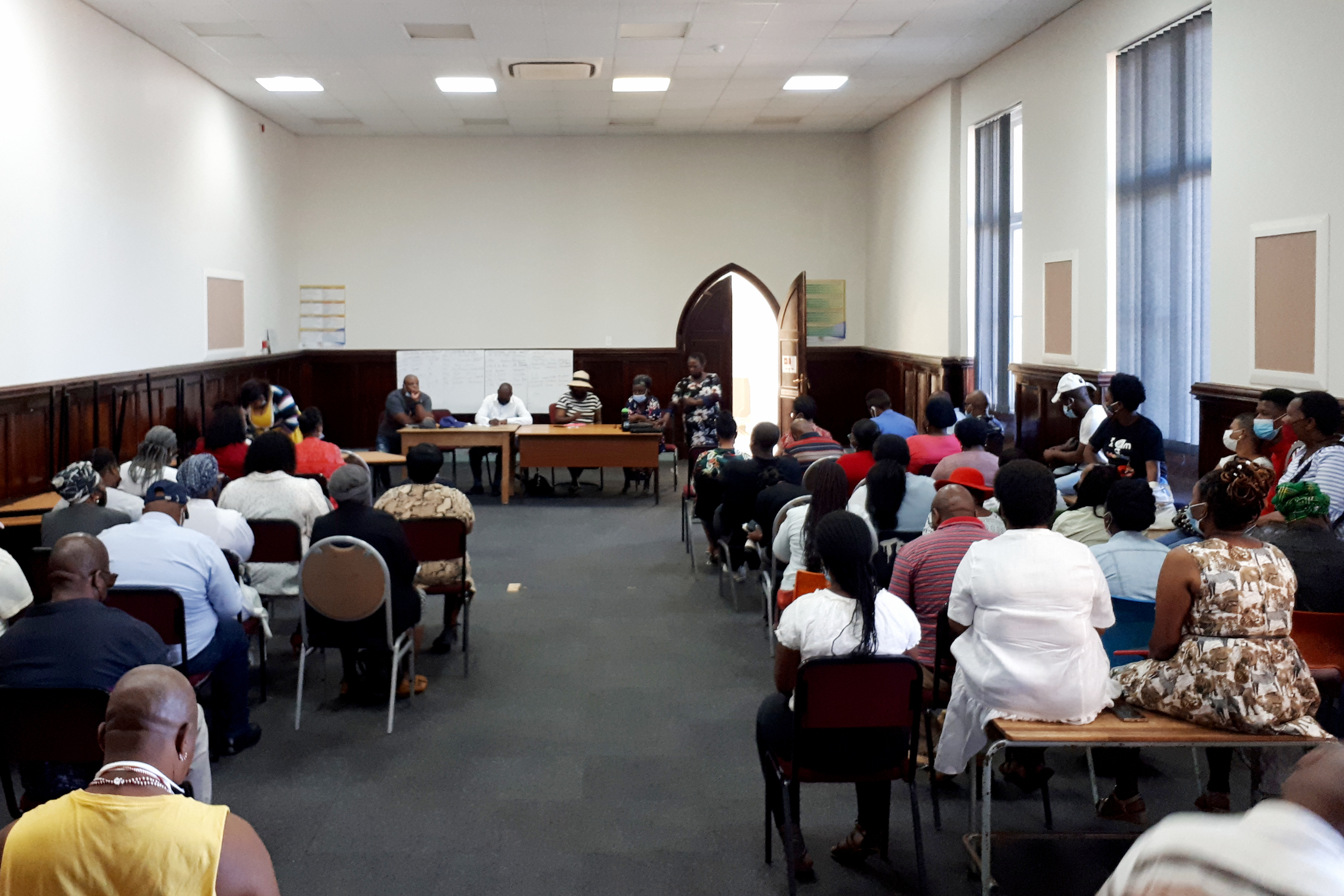
Some of the participants in a newly formed group called the SGB Forum meet at the Department of Education’s Makhanda offices on Tuesday 22 February. The group, which initiated a shutdown of public schools in Makana and Ndlambe last week, has called for a return to teaching and learning on Wednesday 23 February. Photo: Sue Maclennan
Parliament’s Portfolio Committee on Water and Sanitation conducted a site inspection at Makhanda’s James Kleynhans Water Treatment Works (JKWTW) on Tuesday 25 January 2022. DWS spokesperson Sputnik Ratau said the visit to the Department of Water and Sanitation-funded upgrade project was to assess progress. Following numerous delays since the project started 10 years ago, the most recent revised anticipated completion date was March 2022. The upgrade is set to double the facility’s production to 20 megalitres a day.
For the past month, it’s been the town’s water reticulation rather than supply issues that has caused prolonged outages. But there have been questions about supply as well.
With too little rainfall in its catchment, Makhanda’s main reservoir, Settlers Dam, remains depleted. The R10 million refurbishment of Jameson and Milner Dam has yet to add to the water supply west of the town. However, recent photographs show Howisons Poort Dam to be full.
For a brief period in 2021, with Howisons at 75% and feeding the Waainek Water Treatment Works, the town received water every day. So residents have been puzzled to see in communication from the municipality that the reservoirs that are filled by Waainek (via Howisons Poort) are low.
In response to questions from SmilingSouth, Makana said, “Howisons Poort is currently utilised for Waainek; however it is currently operating at 60% capacity, in order to manage turbidity levels to be always below 1NTU [the unit used to measure the concentration of suspended solids in water].
“Also, the water on the western side of town is usually a mix from both Waainek and JKWTW,” the municipality’s infrastructure directorate said via Makana spokesperson Yoliswa Ramokolo.
This was because while the combined water storage capacity for west Makhanda is 13.52ML a day, Waainek’s design capacity (how much water a day it can treat) is 8ML.
The month-long outage in several parts of town was caused by problems with reticulation. A project to replace sections of this very old, mostly asbestos pipe system began last year and is still under way. MANCO, the contractors for that project, were the ones called to assist the municipal team to fix the long-running Worcester Street saga.
Burst pipes
The crucial Worcester Street pipe junction in Makhanda that repeatedly defied repair was finally fixed on 26 January. The conclusion to the engineering nightmare came after four weeks of repeated pipe bursts there and across the town left many residents with dry taps and short tempers. Makana Municipality was able to reinstate the town’s normal one-day-on, one-day-off regime, a day after Parliament arrived in town to inspect its main water treatment works and a day before councillors heard that water losses had amounted to R7.9 million in the previous financial year.
Responding to questions about multiple repeated burst pipes across Makhanda during the past month, Makana said the aged and dilapidated infrastructure; excessive pressure, when sections are isolated; and damage to the reticulation system during construction because the as-built drawings are often not accurate, were the main contributing factors.
Hard-to-get parts, rain filling up the repair trench, a TLB (“digger”) breaking down, further leaks filling up the repair trench with water and the repair team having to urgently attend to new serious pipe breaks across the town were some of the challenges the Makana team faced.
It wasn’t the first time that the combination of rain, clay ground and the ageing water system caused chaos at the Worcester Street site. In April 2018, local newspaper Grocott’s Mail reported on an operation to rescue a cow that fell in the water-filled trench after protracted repairs there.
Professional service provider
But questions have been asked about the qualifications and experience of those tasked with contracts and repairs, and those overseeing the town’s water systems.
Not knowing the [reticulation] system properly and not opening and closing valves in the correct sequence when turning the water on and off, may have contributed to the repeated breaks, a person familiar with the town’s decades-old water systems said. “Also failure to properly compress the pipe after fixing it. There is a lot of pressure in the pipes when you switch the water back on and if sand has just been thrown on top and not compressed, it will burst in the same place,” they offered.
Asked about the competence of those tasked with maintaining and repairing the town’s water systems, Makana responded, “The plumbing team and supervisors have the necessary qualifications, skills and expertise, at various levels, based on their job description. There is also a Professional Service Provider and a contractor with relevant CIDB grading, who is contracted for the replacement of the old asbestos pipes.”
Director of the Public Service Accountability Monitor (PSAM) at Rhodes University, Jay Kruuse, called on the Mayor and Municipal Manager to publicly release the approved organogram of Makana Local Municipality.
“This should include a breakdown of which posts are filled by whom and which posts remain vacant,” Kruuse said. “The public has a right to know the extent of vacancies and who in fact occupies which posts in the municipality, so that accountability mechanisms can be strengthened.”
Kruuse said the repeated and widespread water outages across Makana Municipality continued to violate the constitutional right of access to sufficient water.
“PSAM also calls on municipal councillors elected recently to interrogate the organogram and to take oversight action to address deficiencies that continue to impact negatively on the operations of the municipality.”
Critical upgrade
Parliament’s action-oriented visit to James Kleynhans Water Treatment Works last week was not in response to the month-long water outage in parts of Makhanda, but in order to do oversight on the critical upgrade to the facility that will ultimately ease the city’s supply problems.
DWS spokesperson Sputnik Ratau said MPs accompanying chairperson of the water and sanitation portfolio committee Robert Mashego were the committee’s Whip, Grace Tseke, Nancy Sihlwayi and Mogamad Hendricks. The DWS Eastern Cape team was led by the Provincial Head Portia Makhanya, Amatola Water chairperson Dr Mosidi Makgae and acting CEO Sazile Qweleka.
“This was an oversight visit by the Parliamentary Portfolio Committee on Water and Sanitation on DWS funded projects to assess progress made,” Ratau said. Other Eastern Cape projects they visited were Ngqamakhwe Bulk Water Supply; Xhora Bulk Water Supply; Mzimvubu Water Project at Maclear’s Siqhuqwini village (oversight visit for the access road to the dam wall); King Sabata Dalindyebo Presidential Intervention Bulk Water Supply Project; Ndlambe Emergency Bulk Supply Project and the Nooitgedagt Phase 3 Bulk Water Supply.
It was too early to comment on the Committee’s findings.
“The Committee will convene and discuss their observations and make recommendations and can release these as the Committee sees fit,” Ratau said. “The report will be compiled and processed according to the rules of Parliament.”
Meanwhile, in local government, Makana’s internal audit committee report tabled at last week’s council meeting revealed that water losses amounted to R7.9 million in the previous financial year.
“There is a high percentage of losses and revenue collection is slow,” said audit committee chairperson Professor Wesley Plaatjies.
“The cost of not implementing controls to reduce these losses versus the cost of repair and implementing controls over the long term need to be considered,” Plaatjies said. “The committee requested a fully costed report implementing loss controls for the next audit committee meeting.”
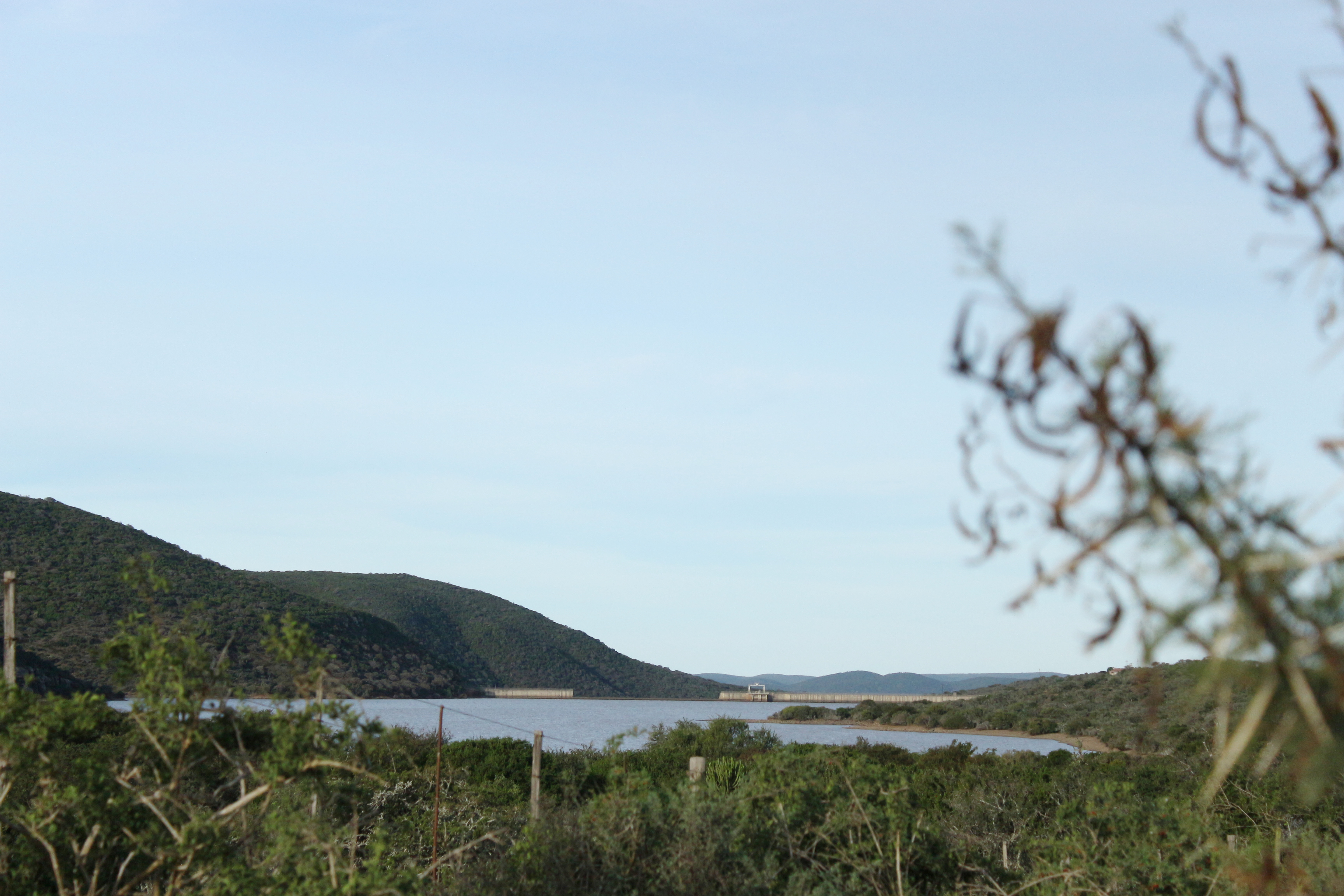
Settlers Dam from the waterfront area of the campsite at the end of November 2021. Rainfall in the catchment up to the end of January 2022 has failed to bring Makhanda’s main reservoir anywhere close to the level required before it;’s possible to extract water. Photo: Sue Maclennan
When an inter-town passenger bus drove into and snapped a low-hanging electric cable in George Street early on 23 January, residents asked why it seemed to have been ignored, more than three hours after it was reported. Makana Municipality said their electricians had been there, but a changed padlock meant they weren’t able to access a substation so they could safely work on the fault.
A little after 5.30am on Sunday 23 January, Sunnyside resident Cathy Gorham (who gave permission for these posts by her to be used) put a warning on the Sunnyside neighbourhood WhatsApp group.
“Wire quite possibly live hanging very low across George Street. Wire runs along Lawrence so crosses the intersection there. [Local security company] has reported it. Looks low enough for a truck or bus to run into. Be careful.”
Seconds later, she posted: “Anyone else without electricity??”
Then almost immediately: “Intercape bus drove into this wire hanging over George Street.”
Gorham said she’d been leaving home to take her dogs for a walk. When she reached a tree on the corner, she looked up and noticed the low-hanging wire. Worried that it could hurt someone, she quickly went inside to report it to a local security company and warn her neighbours.
When Gorham went back outside, she was shocked to see that exactly what she’d predicted had just happened: an Intercape bus had come to a halt after driving into the cable and snapping it.
The force of the rebound had cracked a left side window of the bus and the driver was walking around the vehicle checking for further damage.
Gorham was horrified to see that the other end of the now broken cable had ended up exactly where she’d been standing with her dogs a few minutes earlier.
“If I’d left my house two minutes later with my dogs, one of the cables that snapped… would have hit me,” Gorham said. “It wrapped itself around the tree on the corner [i.e. the one she’d been standing next to].”
Another resident said the low-hanging cable had been reported to the municipality much earlier, to no avail.
Just over an hour later, Gorham reported that municipal electricians had arrived to work on the fallen lines.
Intercape Communication Officer Shaun Smeda confirmed that the incident did take place around 5.50am on the morning of 23 January 2022.
“No passengers or crew were injured,” said Smeda, who declined to comment further.
Makana Municipality said their standby electrician had received a call from the fire station at 2.10am about a power outage in George Street.
“He went to pick up the standby team, and arrived at 03:10,” spokesperson Yoliswa Ramokolo said. “The team noticed a low-hanging aluminium conductor [at the intersection of] George and Lawrence streets.
Gusts of wind were blowing it towards the branches of a tree.
“When tested, it was discovered that the conductors were not live,” said Ramokolo.
The electrician organised a standby cherry picker team, who arrived at 4.30am.
“Both teams went to the Market [Square Centre] substation (at the back of Shoprite) where George and Lawrence streets are powered [from]; however, they could not get access to the substation, as the padlock [had been] changed…”.
“While still waiting for security, who arrived at 06:00, to open the substation for full isolation, the team received a call from the fire station, notifying them about the incident that involved the bus, which snapped off the low-hanging conductor,” said Ramokolo. “So, the main delay was a result of inaccessibility to the substation.”
Market Square Centre is managed by Broll Property and SmilingSouth spoke to the company’s asset manager for the Eastern Cape, Izak Kriel.
Kriel said, “There has been no instruction from me to provide or change a lock for that substation.”
Asked what the response protocol is for faults involving electrical infrastructure, Ramokolo said, “Faults are reported at the electricity department during the day and at the Fire Department after hours and then a standby electrician will be contacted.”
We asked: what does the maintenance programme for electrical infrastructure in Makhanda entail and how is the infrastructure checked for safety and integrity?
Makana responded: “The departmental maintenance programme entails substation inspections and overhead line inspections. These are checked through relevant testing equipment and captured on the relevant inspection sheets.”
Council’s portfolio committee for infrastructure has oversight of maintenance programmes through the inclusion of inspection records in its meeting agendas.
Have a say
Residents can play an effective role in highlighting neighbourhood issues through ward committees and Makana’s ward committee elections are coming up so ask your ward councillor for nomination forms. Think about people in your community who you think will make sure your concerns are heard and who can provide your ward councillor with the detailed information they need to fully represent your interests and help solve neighbourhood issues.
The side window of an inter-city passenger bus was broken when it drove into a low-hanging electric cable as it entered Makhanda early on Sunday 23 January 2022. Photo: Cathy Gorham
Staff at Joza Post Office in Makhanda arrived at work on Monday morning 24 January to discover that the facility’s safe was damaged and cash had been stolen – right under the nose of a security guard. The town’s CBD Post Office was hit by armed robbers in November 2021.
Spokesperson for the Post Office Eastern Cape Nombulelo Ngubane said, “We can confirm that there was a silent robbery via our back door. The loss amount was very small and the branch is now on the SAPS priority list for constant patrol. This includes our main branch in town.
“A guard was on duty but somehow didn’t pick that there was a robbery in progress,” said Ngubane.
Staff has discovered the theft when they reported for duty on Monday 24 January.
The South African Police Service’s Organised Crime Unit was investigating the incident, said SAPS spokesperson Sergeant Majola Nkohli.
“Police can confirm that they are investigating a case of housebreaking and theft, following a break-in at a Post Office in Joza over the weekend,” Nkohli said.
“It is alleged that on Saturday afternoon, 22 January 2022, the post office closed for business, and on Monday morning, 24 January 2022, at about 7am, the Post Office employees when reporting for duty noticed that there was a burglary and a safe was also damaged.
“An undisclosed amount of cash was missing. A case was opened for further investigation,” Nkohli said.
Police have urged anyone with information that could lead to the arrest of the suspect (s) to contact the nearest police station. The information may also be shared anonymously via Crime Stop on 08600 10111.
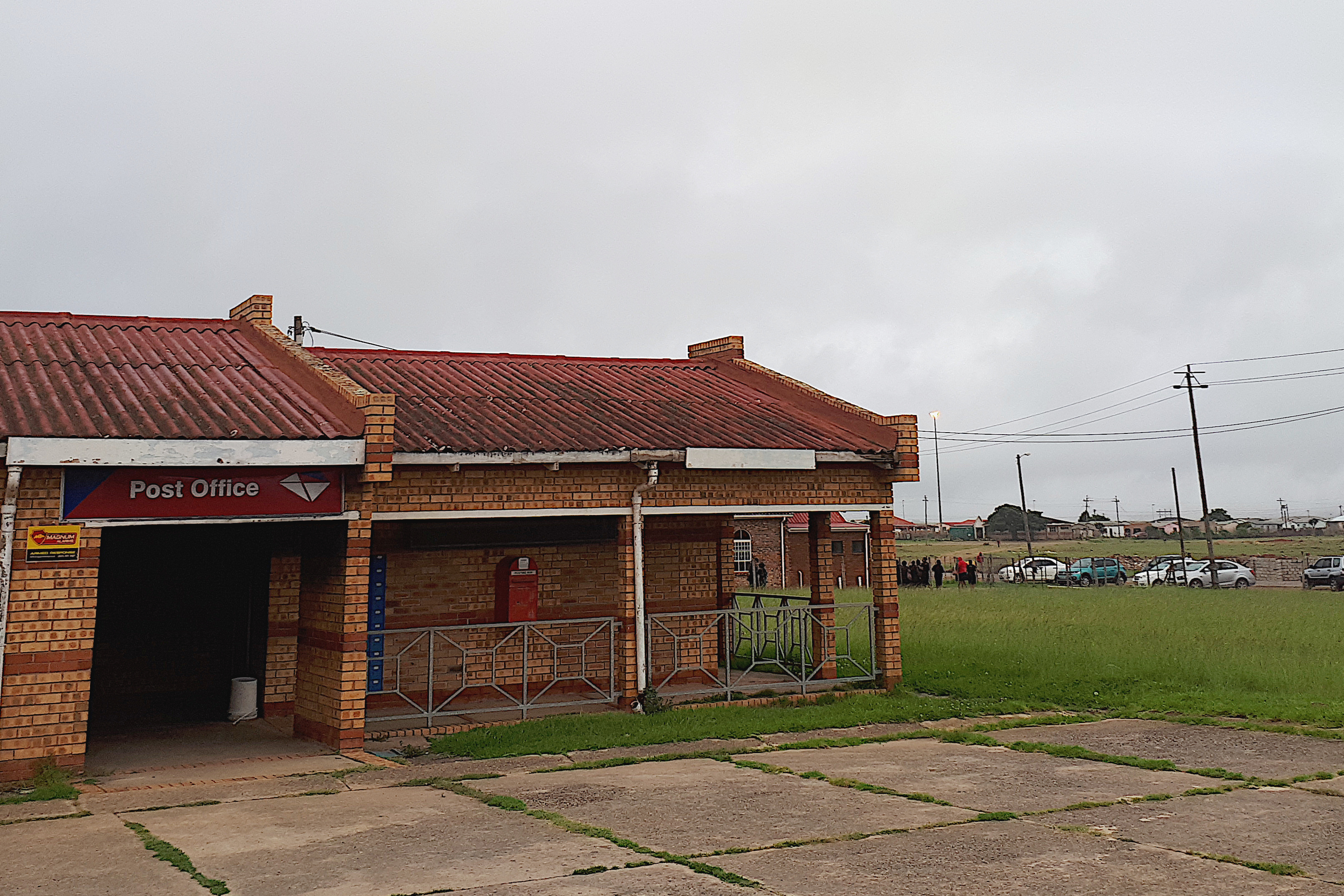
Thieves stole cash from Joza Post Office last weekend, with no break-in and a guard on duty on the premises. Photo: Sue Maclennan
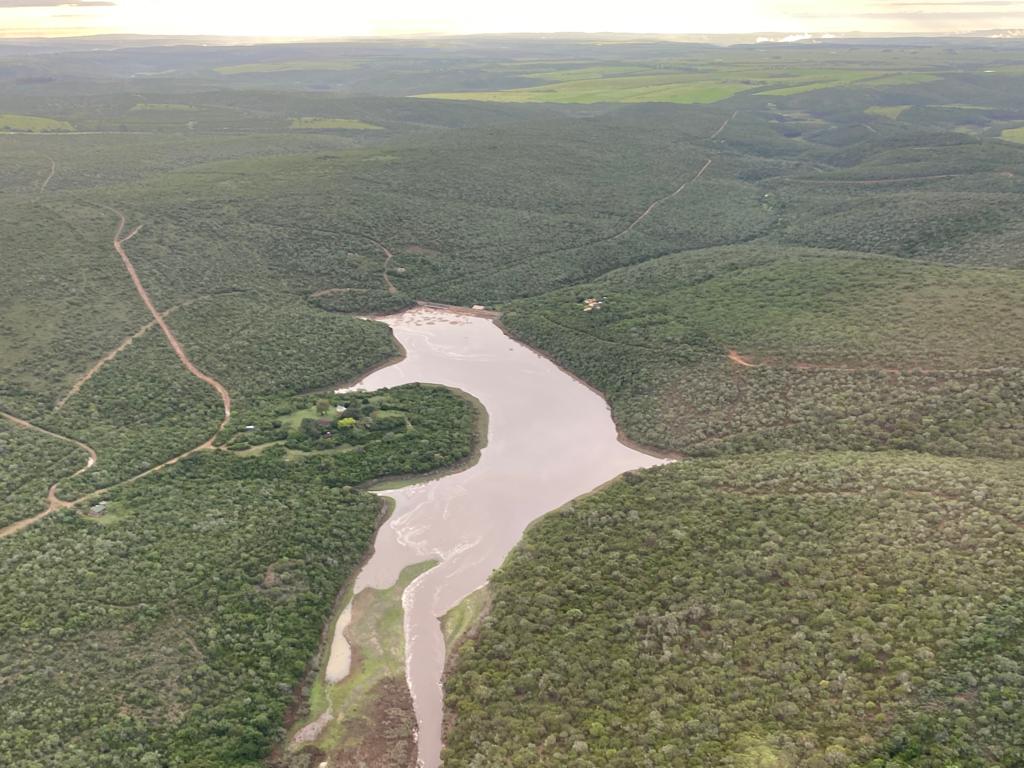
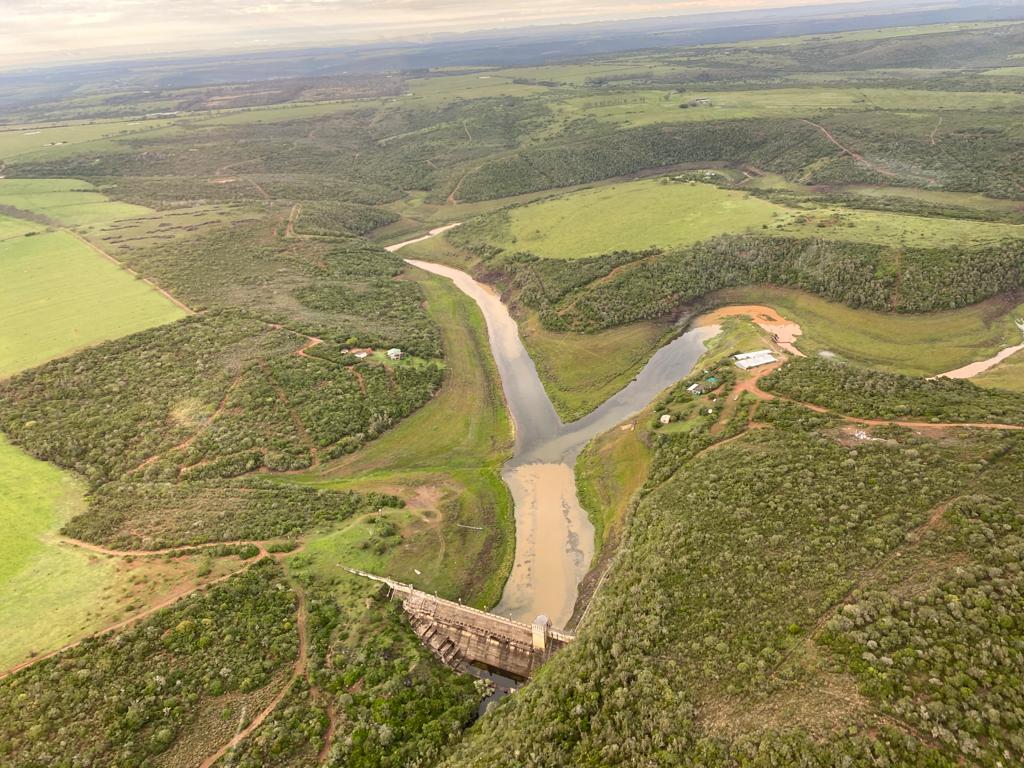
In early December, streams in the catchment started to flow and water began trickling back in to the western reservoirs. Aerial photographs taken on 6 December showed both dams beginning to fill up. The main supply, Settlers Dam, remained too low for extraction, but the smaller Howisons Poort dam quickly filled to 75%. That allowed the municipality to ease on the one-day-on, one-day-off water regime that’s been in place for over a year.
Farmers were optimistic that at least in that climate subzone, the drought might be easing off.
But while photographs taken on Thursday 20 January show more water in Settlers and Howisons, farmers said this month’s rainfall so far had been low.
Past and present chairpersons of the Central Albany Agricultural Association, Dale Howarth and Richard Moss, keep records of rainfall and river and dam levels in the catchment west of Makhanda. Howarth says according to his records, this is the driest January in 120 years.
Howarth said the area had excellent rainfall of 146mm for December which had resulted in some runoff filling smaller dams.
“All dams did benefit from localised runoff; however the rains were not sufficient to get rivers flowing and the bigger dams filled,” Howarth said.
While the veld had recovered extremely well with good grazing and browse available, the water table remained low and rivers dry.
By 20 January there had been only 13 mm to date and some good follow-up rainfall would be required in January to maintain the veld condition, Howarth said.
“The rivers all still need good downpours to get them flowing to fill dams and raise the water table.”
Rainfall in 2021 was 524mm against an average of 625mm and the area’s rainfall had now been below average for the past six years.
“Rivers last flowed in March 2015,” Howarth said.
The past week’s rain hadn’t changed the situation.
“We have had 4mm since 20 Jan for a total of 17 mm for the month,” Howarth said early on 27 January. “It’s the driest January in 120 years. The veld is still good and the small dams have water but the rivers are still dry.”
Moss said by 20 January, Mosslands had seen only 15mm of rain this month.
“The 280mm we had from the end of October to the end of December was magic,” Moss said. “Even though we had all that rain, the river didn’t come down.
“Near the end of December the water table was right up and all the springs in the catchment started running; however they stopped running last week,” he said on 20 January.
Asked about the past week’s rain, Moss said on 27 January, “Maybe 2 mm since Jan 20, just enough to settle the dust.”
Mosslands had 111mm in November and 126mm in December.
Below are Lynda Brotherton’s aerial photographs taken on 6 December and 20 January of Howisons Poort and Settlers dams.
Aerial view of Howisons Poort Dam on Monday 6 December 2021 (left) and Thursday 20 January 2022. Photos: Lynda Brotherton
Aerial view of Settlers Dam on Monday 6 December 2021 (left) and Thursday 20 January 2022. Photos: Lynda Brotherton
Members of the Department of Health’s Makana Subdistrict team with the VW Vaxxers (front row from left) Mnikezeli Fatman; Khanya Soci, Nontozinhle Hewana, Colleen Maqoko; (back row from left) Hayley Davids, Nonkqubela Monakali, Elize Williams and Nomawethu Ndukwana. Behind Ndukwana is Subdistrict head, Mohamed Docrat. Note: masks removed briefly for the photograph only. Photo: Steven Lang
It’s going to be easier than ever for residents and holidaymakers in and around Port Alfred and Makhanda to get up to date with their Covid vaccinations this festive season. The Department of Health’s VW Vaxxers are about to hit town at pop-up sites from Bushmans to Bathurst, Alexandria to Alicedale as they push this corner of the Eastern Cape closer to the 70% vaccination rate scientists say we need to get the better of the pandemic.
Four additional vaccinators and a data capturer have been brought in to boost the Department of Health’s Makana Subdistrict vaccinators over the next three months. The team will be setting up and operating pop-up vaccination sites throughout this period. Three VW Vaxxers will be based in Makana Municipality and one will work with a team in Ndlambe.
“We want to make it as easy as possible for people to get vaccinated,” said Subdistrict head of health, Mohamed Docrat. “The plan is to go to where people are, so they don’t have to interrupt what they’re doing, or make complicated plans to get to a vaccination site.”
Shopping centres, taverns and other popular spots are where you can expect to see them and while it’s helpful if you pre-register on the EVDS (electronic vaccination data system), you can also register at the pop-up.
While anyone eligible to be vaccinated is welcome at the pop-up sites (as well as the permanent sites), the team will particularly be targeting younger people. Latest available vaccination stats for the area show that the lowest vaccination rate is among the 18-34 age group. Just over half of 23 874 people targeted in that age group are fully vaccinated.
In order to stabilize infections and serious illness, the national Department of Health is aiming for a 70% vaccination rate. In September 2021, Deputy President David Mabuza said the country was on track to vaccinate 70% of South Africans before the end of the year. However, the covidvaxlive vaccination tracker reports that on 8 December 2021, 25.46% of the country’s population is fully vaccinated.
The Makana municipal area has somewhat bucked the national trend.
Vaccination targets refer to 70% of the population within an age group. For Makana, the 50-59 and 60-plus age groups reflect a 105% fully vaccinated population – an anomaly caused partly by the fact that vaccinations are recorded according to where a vaccine comes from. In other words, if a team from Makana conducts a community outreach campaign in Alexandria using vaccines from the Settlers Hospital supply, the vaccinations will be recorded for Makana.
The 34-49 age groups reflects a respectable 84% fully vaccinated rate in Makana.
The 18-34 group is at 54% and so it’s this group that will be the main focus of the campaign.
Meanwhile, while many are yet to receive their first shot, the South African Health Products Authority (SAHPRA) on Wednesday approved the distribution of the third dose of the Pfizer COVID-19 vaccine for adults. This means all adults in South Africa are now eligible for a booster shot six months after the second dose. SAPHRA says Pfizer booster shots will available from January 2022.
According to Pfizer and BioNtech, three doses of the Pfizer-BioNTech COVID-19 Vaccine neutralise the Omicron variant (B.1.1.529 lineage). Omicron is a fast-spreading variant first identified by South African scientists.
Members of the Department of Health’s Makana Subdistrict team with the VW Vaxxers (front row from left) Khanya Soci, Elize Williams, Colleen Maqoko, Nomawethu Ndukwana, Nontozinhle Hewana; (behind, left to right) Mohamed Docrat, Mnikezeli Fatman, Nonkqubela Monakali, Magdalene Assumption, Pumla Hermans, Marilyn Haywood, Hayley Davids, Gudrun Langford, Noel Isaacs. Photo: Steven Lang






 SmilingSouth